
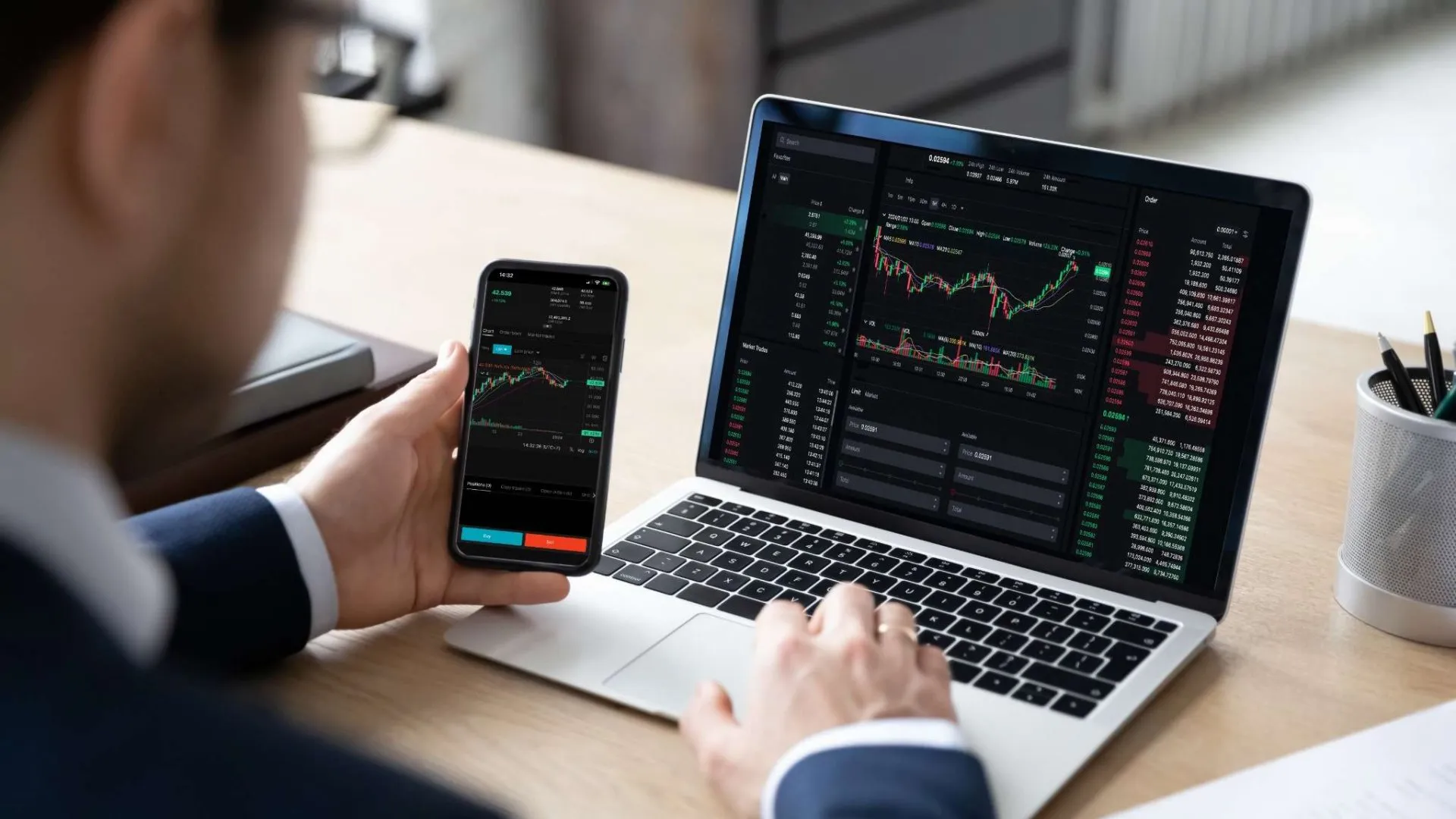
Today prop trading has evolved into one of the most promising ways to trade with considerable amounts of capital while having relatively small personal investments. For new traders, using leverage seems to be an obvious option since it allows you to manage larger amounts of capital using less money. At the same time, for experienced traders, managing risks is more important than using leverage while trading a funded account.
One can succeed with minimum leverage and a high level of discipline, whereas the maximum leverage will not help you if you do not have decent risk management skills. Risk management is the key factor that helps some traders succeed in prop trading while others fail.
This article will tell you about why risk management is more important than leverage in prop trading, how prop firms assess traders, and how you can use risk management to maintain your prop account over a long period.
Prop Trading Explained
Prop trading, which is also referred to as proprietary trading, provides traders an option to trade with the capital provided by the firm rather than putting in their own money. Proprietary firms usually have evaluation tests for traders, who need to earn a certain amount of profits while abiding by all regulations.
The traders, who successfully clear the test, are then given funded accounts along with splitting profits with the firm. Prop trading makes it possible for traders to trade in larger quantities without having to put in a huge amount of personal funds.
The key concern of proprietary firms is the consistency of traders and protection of capital.
Trading Leverage Explained
Before moving onto risk management, it is first necessary to learn about leverage.
Leverage means that traders are able to trade bigger positions even when trading small amounts of money. In other words, by using 1:100 leverage, a trader with just $1,000 is able to control $100,000 in position size.
text{Position Size} = text{Margin} times text{Leverage}
Leverage means both profits and losses can be increased. Of course, there is a huge risk, but at the same time, there is huge opportunity. Many novice traders think that the leverage is the magic wand of successful trading, but it is not.
Leverage merely multiplies your decisions – good ones bring profits, bad ones lead to destruction.
Why Novices Overestimate the Importance of Leverage
Novice investors tend to pay too much attention to leverage since it helps generate huge returns on small fluctuations in the market. The social media hype around leverage contributes to the belief that leveraging helps people get rich quickly.
Examples of why novices overemphasize the importance of leverage include:
- Need for instant gratification
- Insufficient trading skills
- Emotional behavior when trading
- Misperception about risk management
- Overestimation after achieving minor successes
In proprietary trading, this attitude can become harmful due to the presence of strict restrictions on losses. Only one or two trades may be enough to breach the guidelines and lose the entire funded trading account.
True Purpose of Prop Firms
While most prop firms do not need gamblers, they look for traders that are capable of handling risks in the market.
A trader that consistently generates 5%, while controlling the losses, can be better than a trader that makes 20% in one month and loses it all the following month.
Prop firms judge traders by their:
- Consistency
- Drawdown management
- Reward-risk ratio
- Emotional control
- Profitability
It explains why risk management becomes a greater priority than leverage.
What Is Risk Management in Trading?
Risk management involves the control of possible losses and protection of trading funds.
Examples of good risk management include:
- Placement of stop-loss orders
- Keeping the amount of risk low per trade
- Proper positioning
- No emotional trades
- Following the trading plan
- Risk to reward ratio
Survival is key. In trading, protecting your funds is better than making huge amounts of money.
Why Is Risk Management Better than Leverage?
1. Risk Management Protects Your Funded Account
When traders do not pay attention to the risk level, their account is easily vulnerable. Prop firms impose many restrictions on the risk limit of traders.
For instance:
- Daily drawdown limit = 5%
- Maximum drawdown limit = 10%
In case traders use too much leverage and place large orders, one price change may already violate the restrictions.
Good risk management allows traders to trade within the firm’s limitations and keep their account stable.
2. Leverage Increases Emotional Stress
Leverage makes traders undergo emotional stress due to every price change that significantly influences their account balance.
Emotions that usually occur when leveraging your account include:
- Fear
- Panic
- Greed
- Revenge trading
- Overtrading
To avoid such behavior, you should consider risk management.
3. Steady Performance Beats Aggressiveness
There is a popular opinion among traders that it is necessary to make high profits in order to be successful in prop trading. However, in most cases, it is much easier to be consistent than aggressive.
If a trader risks 1%, he/she will stay in the game even during a period when losses occur. But, if he/she risks 10%, there might not be any money left in his/her trading account after several losses.
Steady performance is one of the greatest advantages of successful traders.
4. Stay Alive – This Is the Main Principle of Trading
Pros know the fact that survival is a priority for traders.
New opportunities will always come, but traders will not be able to use them if they have blown their accounts.
It helps traders practice their trading and gain experience.
Popular Risk Management Techniques
Employ a Constant Percentage Risk Level
Professional traders take very little risk on each trade, usually 1% or 2%.
Calculation formula:
- text{Amount of Risk} = text{Account Funding} times text{Risk Percentage}
- With an account balance of $100,000 and taking 1% risk on the trade, the maximum loss will be $1,000.
This technique helps to keep money intact through losing runs.
Set Stop-Loss Orders
Setting stops in advance allows automatic closure of a position if the market touches the specified point.
Without a stop loss, traders put themselves at the risk of limitless loss, particularly when employing leverage.
Stop losses aid discipline and minimize emotional trading.
Keep Optimal Risk-to-Reward Ratios
Professionals strive for achieving reward that exceeds risk.
For instance:
- text{Risked Amount} = $100
- text{Target Profit} = $200
- The resulting ratio will be 1:2.
Thus, even in case traders earn only half of the total number of trades, they can still achieve profit in the long term.
Don’t Trade Too Much
Overtrading is a main cause of failing to pass a prop firm test.
The more trades you make, the more exhausted emotionally you become.
Risk management entails exercising patience and finding optimal entry points.
The Connection Between Leverage and Risk
Knowing what leverage is in trading is important because leverage alone isn't harmful. The issue arises when traders mismanage it.
Leverage should be considered an instrument, not a system.
Professional traders responsibly apply leverage with stringent risk management guidelines. They concentrate on capital preservation instead of overambitious profits.
If applied correctly, leverage can enhance effectiveness. Otherwise, it turns into the quickest way to deplete your trading funds.
Risk Management Warning Signs
Most traders don't succeed since they overlook indicators like:
- Upsizing lots after losses
- Executing trades without stop loss orders
- Exposing yourself to excessive risks in a single trade
- Sticking to losing trades for emotional reasons
- Neglecting trading plans
- Continuously applying maximum leverage
Developing Long-Term Success in Prop Trading
Long-term success in prop trading requires discipline rather than excitement.
In order to achieve long-term success in trading, traders should concentrate on:
- Consistency in trading decisions
- Risk management
- Discipline regarding emotions
- Patience
- Reasonable profit projections
A trader that takes great care in protecting his funded account will be able to generate profits for many years to come.
Conclusion
While high leverage might seem alluring due to its ability to bring bigger profits, the key to prop trading success lies in risk management. While the understanding of leverage is crucial, learning to mitigate risks might prove to be even more vital.
Proprietary firms appreciate those traders that know how to manage risks, follow the rules and trade consistently. Excessive leverage and lack of discipline usually results in emotionally-driven decisions that cost traders their accounts.
The purpose of trading is not to generate profits from each individual trade. The main point is to minimize losses while maximizing profitable trades.